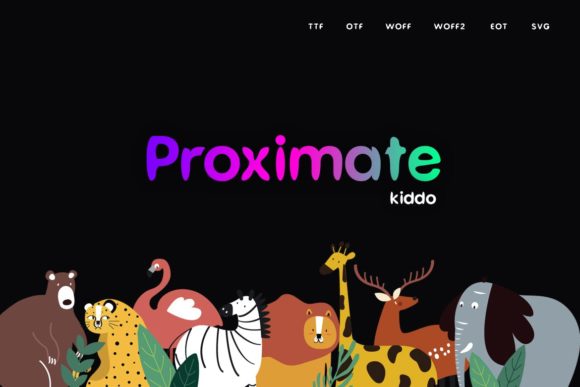
Proximate Kiddo Font Review
As a web designer, I’m always on the lookout for fonts that bring personality and visual interest to digital projects. Proximate Kiddo is one of those typefaces that feels like it was made for creative websites—playful, colorful, and full of charm. I tested it across several layouts, from hero sections to call-to-action buttons, and found it to be a standout choice for adding a whimsical touch without sacrificing clarity.
Visual Personality and Digital Appeal
Proximate Kiddo has a distinct childlike energy that makes it perfect for brands targeting younger audiences or those looking to inject fun into their design. Its rounded edges, gentle curves, and bright character shapes give it a soft, approachable feel. Whether used in a header or as a decorative accent, it brings a sense of warmth and creativity to any layout.
The font’s color palette is vibrant but not overwhelming, making it easy to integrate into modern web designs. It works well with both light and dark backgrounds, especially when paired with clean, neutral colors. This versatility makes it ideal for boutique online stores, creative portfolios, and digital marketing campaigns.
Web Design Use Cases
I used Proximate Kiddo in a few different scenarios to see how it performed. On a product landing page, it stood out as a bold headline, drawing attention without clashing with the rest of the design. In a coaching website, it worked beautifully as a section title, adding a playful tone that matched the brand’s friendly and encouraging vibe.
For a blog redesign, I placed it over an image banner as a featured headline. The font’s readability at larger sizes made it a great fit, while its unique shape added visual interest. It also looked good on buttons, where its friendly style helped reinforce a positive user experience.
Readability and Responsive Performance
One of the first things I checked was how Proximate Kiddo performed on mobile devices. At smaller screen sizes, it remained legible, though I’d recommend using it for short phrases rather than long paragraphs. It’s best suited for headlines, titles, and short labels, where its visual appeal can shine without compromising clarity.
In responsive layouts, the font scaled well, maintaining its character even when resized. On dark backgrounds, it contrasted nicely without appearing too harsh. When overlaid on images, it worked well as a text layer, provided the background wasn’t too busy.
Font Pairing and Web Usability
When working with Proximate Kiddo, I found that pairing it with a simple sans serif font like Open Sans or Lato created a balanced look. This combination allowed the display font to stand out without overwhelming the design. For more editorial-style sites, pairing it with a serif font like Playfair Display gave a refined yet playful aesthetic.
It’s important to consider accessibility when using Proximate Kiddo. While it’s great for headings and decorative elements, it’s not ideal for body text or small navigation items. Stick to larger sizes and high-contrast backgrounds for the best results.
Commercial Use and File Formats
Before using Proximate Kiddo on client projects, I checked the licensing details. The font comes with commercial use rights, which is essential for web designers creating assets for clients or selling templates. It’s available in multiple file formats, including WOFF and TTF, making it easy to integrate into CSS and web projects.
I also looked into the included styles and alternates. There are enough variations to keep designs fresh without needing to switch fonts. Multilingual support is a plus, especially for international websites or multilingual content.
Final Thoughts
Proximate Kiddo is a versatile display font that adds a unique flair to web design. Its playful style makes it ideal for creative websites, branding projects, and digital marketing materials. While it’s not meant for long-form text, it shines in headers, banners, and decorative elements. With proper pairing and thoughtful use, it can elevate a website’s visual identity and create a more engaging user experience.